
Smart Home / Buying guide
A smarter, simpler clean for busier homes
How today’s robot vacuums can take more of the day-to-day work off your plate.
Start with the floor plan
The useful question is which parts of your home you want cleaned regularly, and whether a robot can reach them. Walk the route between rooms. Look at thresholds, narrow chair legs and the space under low furniture. Measure the location you have in mind for the dock. A machine that needs rescuing every morning may create a new task rather than remove one. This guide offers a buying framework; SmartNook has not performed cleaning tests.
Navigation still needs a prepared room
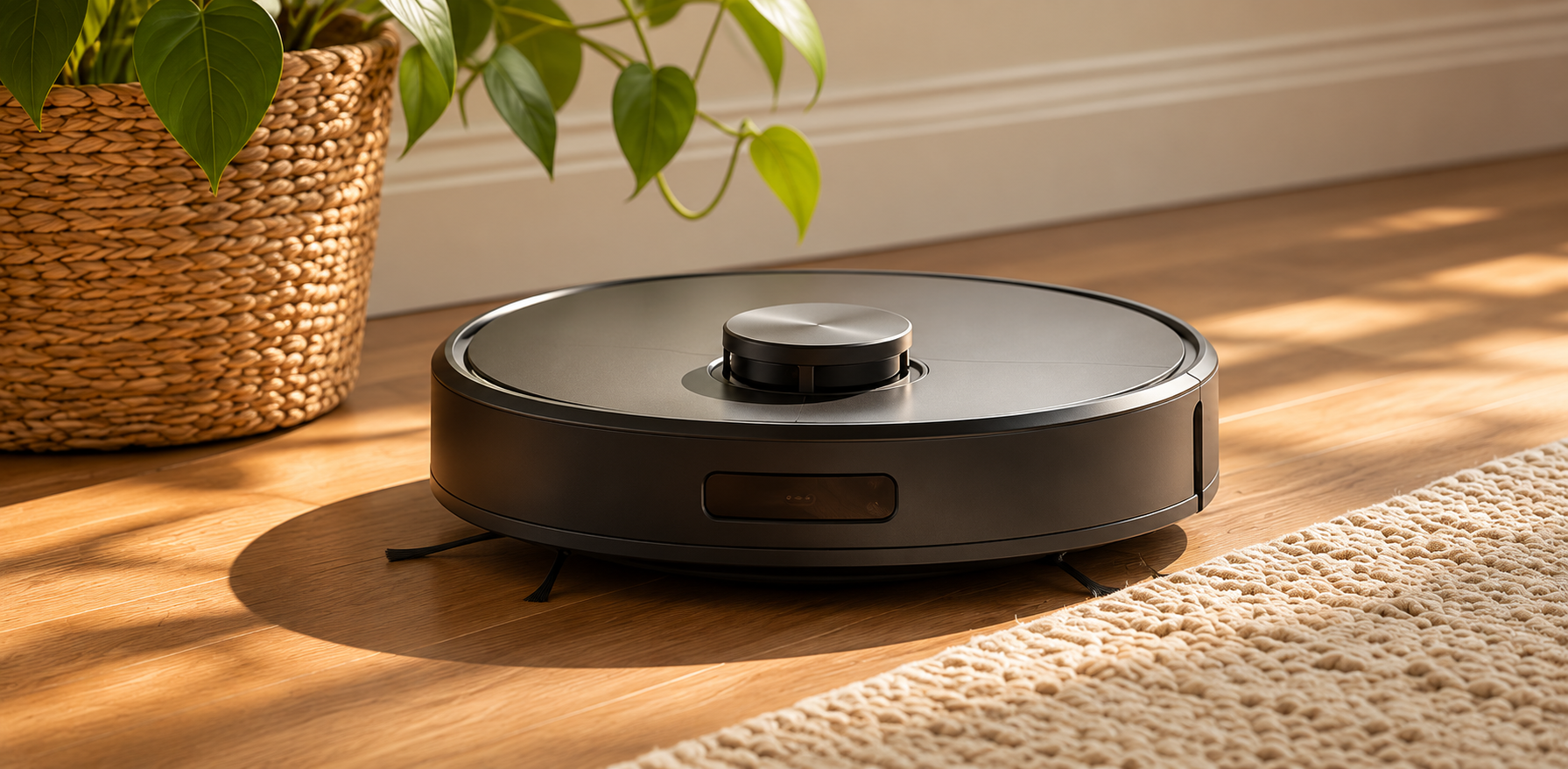
Mapping and obstacle detection do not remove every practical limitation. Loose cords, small clothing items and objects around furniture deserve attention before a run. iRobot’s preparation guidance advises clearing obstacles when creating a map. The exact tools vary by model, so check the manual for the product you are considering. Do not assume an illustration identifies a particular sensor system or proves a cleaning result.
Match the cleaning system to the surfaces
List your hard floors, rugs and carpeted rooms. For a vacuum-and-mop model, check how it handles transitions and which floor types the manufacturer permits. Look for clear instructions about water, cleaning solutions and zones where mopping should be avoided. Decide whether dry debris pickup is the real priority before paying for a washing station. Consider how you will handle edges, upholstery and occasional deeper cleaning.
Include the chores around the machine
A robot changes the work; it does not make maintenance disappear. Read the instructions for emptying bins, cleaning brushes, washing pads and replacing filters. Check replacement consumable availability and the room the dock needs. Consider where you would carry dirty water and store accessories. These details may matter more over a year than a rarely used feature. We have not independently measured maintenance time or running costs.
Who should consider one?
A robot may suit a household that wants frequent routine floor care and can keep the intended route reasonably clear. It is less compelling when the main tasks involve stairs, upholstery or areas the robot cannot reach. Agree on when the machine should run and how to stop it. Follow the manufacturer’s directions around pets and children. Test the model in your own rooms during the return period.
Our conclusion
Choose the cleaning routine first, then the machine. Buy only when verified floor compatibility, navigation and maintenance fit your actual home. Compare the full cost, consumable availability, warranty and return terms. This is an editorial guide, not a ranked test or a promise that every robot saves the same amount of time. The image is a conceptual illustration and does not depict a tested unit.